
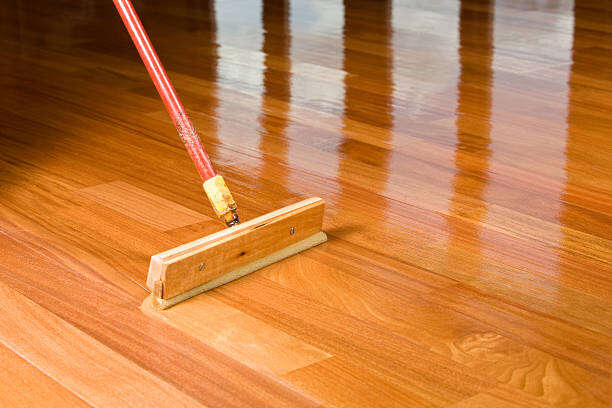
Your floors take a beating. Years of foot traffic, pet claws, furniture legs, and dropped things leave marks that don’t go away on their own. At some point, you’re standing in your living room looking at a floor that used to be beautiful, wondering whether you need to start fresh or whether what’s there can be saved.
That’s the real question. And honestly, most homeowners get the answer wrong on the first try.
What Hardwood Floor Refinishing Actually Does
Hardwood floor refinishing is the process of sanding your existing hardwood down to bare wood, then restoring the surface with stain and a protective finish coat. It doesn’t replace anything. It strips away the worn-out top layer and gives the wood a new surface to work with.
The process usually runs three to four days, including dry time. Most solid hardwood floors can handle six to eight refinishing cycles before the boards get too thin to work safely. That’s a significant lifespan, which is one reason hardwood stays popular when vinyl and laminate alternatives keep getting cheaper.
What refinishing fixes well:
- Deep surface scratches and gouges from normal use
- Fading or discoloration from sun exposure
- Old finish that has yellowed or peeled
- Outdated stain colors you want to change
What it doesn’t fix: boards that are cupped, warped, or structurally compromised. If moisture damage has gotten into the wood, refinishing covers it temporarily but doesn’t solve it.
Here’s the thing most people miss: the sanding step is where jobs go right or wrong. Drum sanders remove wood fast. An inexperienced operator can take off too much in one pass and leave dips that show under raking light. It’s worth asking any contractor how many jobs they’ve run before hiring them. A good refinisher has done this hundreds of times.
When Hardwood Flooring Installation Makes More Sense
Sometimes refinishing isn’t the right call. If your current floors are engineered hardwood with a veneer that’s already been sanded once or twice, there’s often nothing left to work with. Engineered boards have a thin real-wood layer over a plywood core — usually 1/16 to 1/8 of an inch depending on the product. Sand that down too far and you’re into the core.
Hardwood flooring installation makes sense when:
- You’re dealing with damaged or irreparable boards across a large area
- The subfloor has been renovated and the old flooring removed
- You’re adding hardwood to a room that previously had carpet or tile
- You want a species, width, or finish that doesn’t exist in your current floors
Solid hardwood installation typically requires acclimation time — the boards need to sit in your home’s climate for at least 48 to 72 hours before installation starts. This matters more than most people realize. Wood that goes down before it acclimates will expand or contract after installation, and you’ll end up with gaps or buckling that requires a callback.
Engineered hardwood, by contrast, handles humidity variation better and can go over radiant heat systems where solid wood can’t. Species like white oak, maple, and hickory each behave differently in humidity-prone environments. A contractor who knows their material will steer you toward the right choice for your specific conditions.
Cost Comparison: Refinishing vs. New Installation
Neither option is cheap when done correctly. Here’s a realistic breakdown:
| Service | Typical Range (per sq ft) | Notes |
|---|---|---|
| Hardwood floor refinishing | $3 – $8 | Varies by prep work, stain complexity |
| Solid hardwood installation | $8 – $15 | Includes material and labor |
| Engineered hardwood installation | $6 – $12 | Wider price range by species |
Refinishing wins on cost almost every time — assuming your floors are worth saving. A 500-square-foot living room refinish might run $2,000 to $3,500. Replacing those same floors with new solid white oak could run $6,000 to $8,000 or more.
But cost per square foot isn’t the whole picture. If your floors need board replacement, staining to match existing wood, or have significant prep work involved, refinishing costs can climb fast. Get an itemized quote. Any estimate that comes back as a single number with no breakdown is worth questioning.
What to Expect During the Process
Refinishing is dusty. It just is. Modern dustless systems capture most of the debris, but expect to remove furniture, relocate pets, and plan to be out of the house for at least part of the process. The finish coats need time to cure — water-based finishes dry faster (12 to 24 hours between coats) while oil-based finishes offer more durability but take longer.
Installation adds complexity depending on the subfloor. Concrete subfloors require a moisture barrier and either a glue-down or floating method. Wood subfloors allow for nail-down installation, which most flooring professionals prefer for solid hardwood because it holds better over time and feels more solid underfoot.
For both services, the quality of the finish matters more than most homeowners account for. Aluminum oxide finishes are standard in factory-finished floors and hold up well. Site-applied water-based polyurethane gives you control over sheen level and dries faster. Oil-based polyurethane takes longer but penetrates deeper and many contractors say it wears better on high-traffic floors.
How to Choose the Right Contractor
Don’t go with the lowest bid. This is flooring advice that gets ignored constantly, and the callbacks and disputes that follow are predictable.
A contractor doing hardwood floor refinishing should carry insurance, use professional-grade equipment (not rented), and be able to show you photos of comparable jobs. Ask specifically about their sanding sequence — grits matter. Skipping too aggressively leaves scratches that show through the finish.
For hardwood flooring installation, ask about their acclimation process and subfloor prep. If they’re not checking moisture levels in the subfloor before installing, that’s a problem.
Wild Rose Hardwood works across residential and commercial projects, handling both refinishing and new installation with the same attention to prep work that makes the difference between a floor that looks great for years and one that starts showing problems six months in.
Frequently Asked Questions
Q: How long does hardwood floor refinishing take?
A: Most residential jobs take three to five days from sanding to final coat, including cure time. Larger projects or floors needing significant repair work can run longer. Plan to be off the floors for at least 24 hours after the final coat.
Q: Can engineered hardwood floors be refinished?
A: Some can, once or twice, depending on the veneer thickness. Boards with a veneer thinner than 2mm generally can’t be sanded safely. Check the product specs or have a contractor assess the floor before committing to refinishing.
Q: What’s the best hardwood species for high-traffic areas?
A: Hickory and white oak both rate well on the Janka hardness scale and handle wear better than softer species like pine or cherry. Maple is also a strong choice for kitchens and hallways.
Q: How soon can I put furniture back after hardwood floor refinishing?
A: Light furniture can usually go back after 24 to 48 hours with water-based finishes. For oil-based finishes, most contractors recommend waiting 72 hours minimum. Full cure takes up to 30 days, so use felt pads and avoid dragging anything heavy across the floor during that period.
Q: Is hardwood flooring installation worth it over laminate?
A: For long-term value, yes. Real hardwood can be refinished multiple times, adds resale value, and typically lasts 50 to 100 years with proper care. Laminate can’t be refinished and usually needs full replacement after 15 to 25 years.
